The most realistic-sounding weapon in your game is almost certainly fake. Not “fake” as in a cheap sample dropped in as an afterthought – fake in the sense that it was assembled from four or five unrelated recordings, none of which is the gun you’re looking at. That’s not a failure. That’s the job.
Every year some well-meaning solo developer decides that realism means recording a real rifle and pressing play. The result sounds dead on arrival.
Meanwhile DICE, the studio whose Battlefield games basically wrote the book on realistic shooter audio, records real guns, real explosions and real destruction – then spends months chopping those recordings apart and rebuilding them so they never play the same way twice. The distance between “a recording” and “a convincing sound” is the entire game.
So here’s my position up front: acoustic accuracy is a raw material, not a destination. What you’re actually trying to produce is a sound that survives contact with a player’s ear.
That means understanding a few things about how ears work.
Why sound matters more than the graphics you’re staring at
The strongest reason to care is also the most counterintuitive: your players are not hearing your audio and your visuals separately.
In a 2010 study of formal features in video games, researchers manipulated image quality (high definition versus standard definition) and sound quality (Dolby 5.1 versus stereo) independently.
Image quality had no measurable effect on presence or enjoyment. Sound quality almost universally did.
Work at the US Naval Postgraduate School pushed the same idea further with 108 test subjects: pair high-quality audio with high-quality visuals and people rate the visuals as better; pair weak audio with strong visuals and the visuals drag the audio down with them. The two channels bleed into each other.
Translate that into your game and it explains a familiar phenomenon. If the shotgun’s model, animation and muzzle flash are gorgeous but the sound is a polite click, players will remember that shotgun as weak.
Your audio is doing part of your perceived graphics work for you. A sound that reads as real makes the whole moment read as real – and a sound that reads as fake quietly drags the animation, the effects and the weapon model down with it.
A believable gunshot is four sounds in a trench coat
The first mistake everyone makes is treating a gunshot as one sound. It isn’t. From the instant the round ignites, a real firearm produces a sequence of events: the crack of the muzzle blast, the resonant weight of the report, the mechanical cycling of the action, and finally the sound of the space itself ringing. Each lands at a different time and does a different job in the player’s ear.
Professional game sound designers split a weapon into three to six layers, and the useful core is four: the transient (the sharp snap that sells the moment), the body (the weight behind it), the mechanical layer (bolt, slide, casing – the sounds that make a weapon feel like a machine), and the tail (how the shot behaves in the space).
Mark Kilborn, who has designed weapon audio for the Call of Duty series, works exactly this way in his FPS templates.
Timing between the layers matters more than almost anything else you’ll do. The first 10 to 50 milliseconds is where a shot earns or loses its power.
The mechanical layer should arrive just after the transient – in real weapons a cycling bolt reads at roughly 10 to 25 milliseconds after the initial impulse, and a casing pinging off the floor can land 40 to 120 milliseconds later.
| Layer | What it sells | When it hits | Typical source material |
| Transient (crack) | Instant power and legibility | T+0 | Tight clap or impact, snare-style snap |
| Body | Weight, caliber, perceived mass | T+15–60 ms | Bigger gun report, low-mid thump |
| Mechanical | Bolt, slide, casing – machinery | Bolt T+10–25 ms; casing T+40–120 ms | Real weapon actions, metal foley |
| Air / blast | Size, aggression, pressure | T+40–150 ms | Noise bursts, cloth snaps, synthesised air |
| Tail | Space and distance | T+150 ms onward | Convolution reverb impulse responses per space |
Timing targets follow published breakdowns of professional weapon sound workflows, checked against current tutorials in August 2026.
One more trick that sounds like cheating and isn’t: clipping. Deliberately sending the transient layer into a clipper – letting the waveform flatten against a ceiling – is a standard pro move for keeping the attack sharp while the whole shot stays loud.
Kilborn has talked about clipping before the limiter specifically so the limiter can’t squash the dynamics. Most beginner advice treats clipping as an accident. In weapon sound design it’s a tool.
Hits: the sound everyone forgets to design
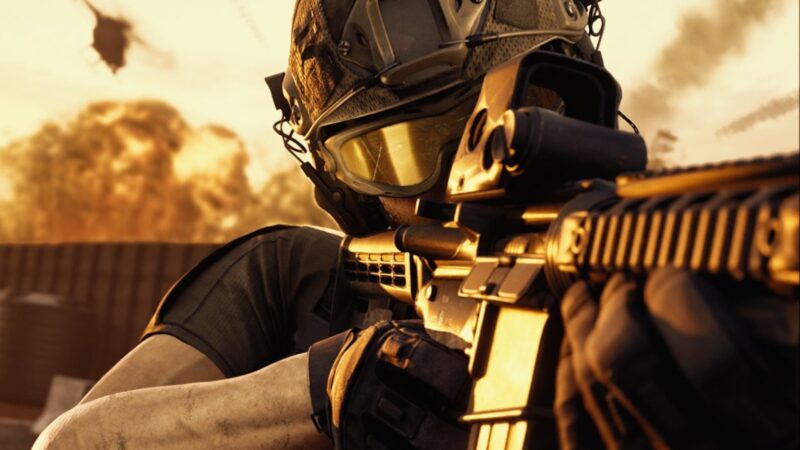
Guns get the budget. Punches, melee swings, sword impacts and body hits – the sounds that make hand-to-hand combat feel real – usually get one canned file if they get designed at all.
That’s backwards, because hits are among the sounds we’re most attuned to as human beings, and in many games you hear them more often than any gunshot.
Film Foley understood this long before games existed. The classic sound library is a catalogue of well-told lies: horse hooves from coconut shells, the stabbing in Psycho from a casaba melon, the bone snaps in The Dark Knight‘s fight scenes from fresh celery.
Nobody records a real bone break, because the real thing doesn’t read as real. The substitute does, because it matches what a viewer’s brain already expects.
Game hits work the same way, just layered. A convincing punch needs a sharp transient (the snap of contact), a low body (the thump transferring through flesh) and an air or whoosh layer so the swing has mass before it lands.
The low layer deserves the most attention: frequencies around 80 Hz are where that felt, chest-thumping weight lives, and they’re also the ones that survive on laptop and phone speakers. Design the low end to translate, and your hits read everywhere.
If you’re not building hits from scratch, a good library earns its keep here. The impact sound effects collection from Ocular Sounds is built on exactly this principle – real strikes and slams recorded, then layered and shaped so each one cuts through a mix. Grab a few as body layers and drop your own transients on top.
Explosions: one big boom is a lie
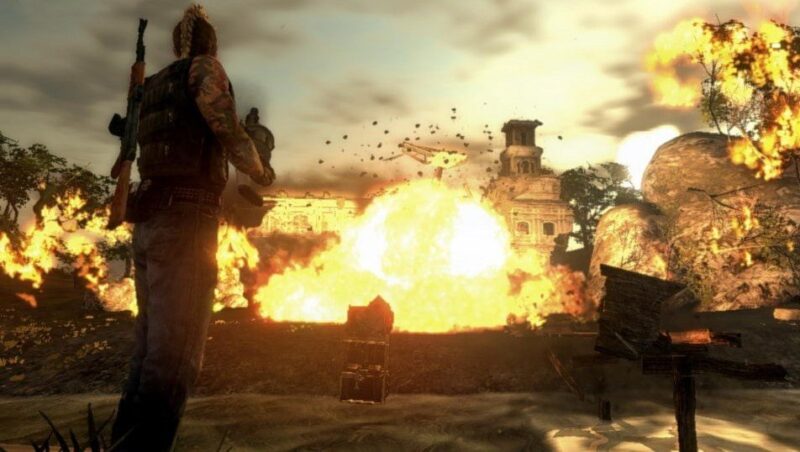
An explosion is the loudest lie in game audio. In reality a big blast is not one sound but a chain: the initial crack, the shockwave, debris raining down, and then a long tail that has almost nothing to do with the explosive itself – it’s the environment ringing.
That last part is the one everyone skips, and it’s the one that sells size. In an urban area the reflections between buildings give a detonation its identity; out in a field the same charge sounds almost dull by comparison.
When DICE and BOOM Library went out to record Battlefield V‘s explosions with military-grade explosives, they set up five recordists, up to 26 microphones and 42 channels of recording – in a real city, because the environment was the whole point.
The other lesson is that distance is not a filter knob. Before Battlefield 1, DICE faked distance by low-passing a single file.
Then they started recording the same events from multiple distances and crossfading between them in-engine, so a close shot keeps its crack while the same blast at range is a rounder boom. Dedicated near, mid and far variants will beat filtered versions of one file in almost every engine.
Variation is the realism engine
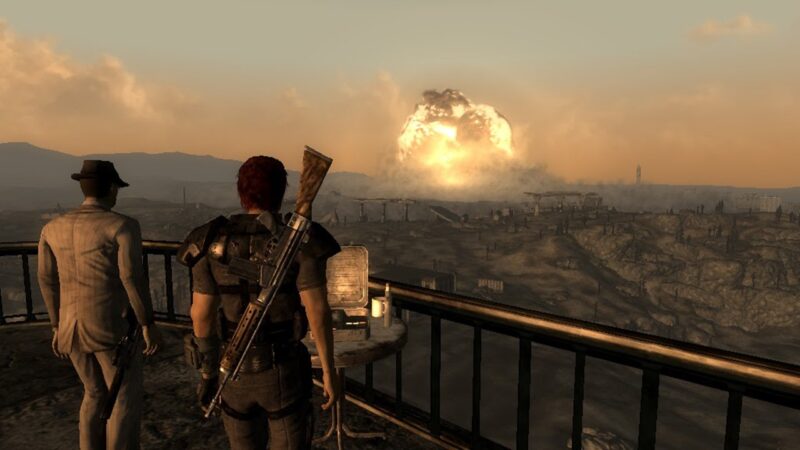
Here’s a test you can run right now. Fire the same gun in almost any game and count how many identical shots pass before your brain flags it. For most games it’s three or four.
Then consider the Wilhelm scream: a single 1951 voice recording that has appeared in hundreds of films since, mostly because sound designers kept reusing it.
A single untouched gunshot file is the game audio equivalent – a signature on the first play, and by the tenth repetition a neon sign that the game is faking it.
The fix is unglamorous and essential: variation. DICE’s sound library holds over a million files because the team refuses to let anything play identically twice, and for Battlefield 1 they pushed it further with what they called “gun synthesizers” – real recordings chopped into shared and unique pieces, then reassembled in-engine depending on distance, environment, angle and rate of fire, in an approach the Battlefield 1 audio team described in detail for A Sound Effect.
You don’t need a million files. You need round-robin alternates (four to twelve per weapon is the common professional range), subtle pitch randomization (a few cents – enough to breathe, not enough to change the weapon’s identity) and micro-variation in the mechanical timing. Keep the crack consistent and let the machinery wander, and the ear believes the machine is real.
The realism paradox (and where I disagree with the purists)
There’s a school of thought, loudest in player forums, that the only honest route to realistic weapon audio is to record the real weapon and ship the raw take. It’s an attractive position, and it’s half right.
Real recordings carry a kind of dirt that is genuinely hard to fake – DICE’s audio director Ben Minto has a phrase for it: “embrace the dirt.”
But pure recorded reality, shipped unprocessed, collapses in a game. The documented case is right in the Hell Let Loose community. In 2020 the developers reworked their weapon audio toward more realism, and the new mix leaned heavily on bass and reverb.
Players – several with real-world shooting experience – pushed back hard: the guns sounded as if they were fired underwater, the sharp crack had vanished, and you could no longer tell where fire was coming from.
The lesson is specific and uncomfortable: close-up gunfire in the real world is dominated by a dry, sharp crack. Bass is something you add as distance grows.
So I disagree with the purists – but I also disagree with their opposite number, who would tell you to record nothing and design everything.
The Battlefield 6 team did the most weapon recordings in franchise history: they shot up cars, dropped shipping containers from cranes with microphones bolted on and buried mics in the ground.
Senior technical sound designer Gonçalo Tavares summed up the philosophy: “it’s easier to record reality than to try and replicate reality.” Then they took those recordings and layered, varied and rebuilt them so they’d hold up over a hundred hours of play.
Record real. Then design the moment.
A recipe you can ship with
If you’re a solo developer with no range access and no recording budget, none of this requires one.
For each weapon: pick a hero transient and a body from a good gun library, record your own mechanical layer at home (slides, bolts, springs – desk foley works), synthesize the sub layer, build two or three tails for the environments you actually ship, and give the engine four to twelve alternates with subtle variation.
For hits, do the same four-layer job at a smaller scale. For explosions, spend your budget on the tail – the initial boom is the easy part.
And the honest caveat: I have not found a commercial game that ships a single untouched field recording and keeps it convincing across a full play session. If one exists, I’d genuinely like to hear it. Until then, build the illusion. That’s what “realistic” means in a game anyway.